Photoshoot Safety Tips for New Models and Parents
If you are booking your first photographer, basic checks can reduce risk and help protect you from unsafe or exploitative behaviour.
This page covers practical steps for verifying a photographer, agreeing boundaries, planning locations. Also confirming how images can be used, with UK-focused guidance for new models and parents.
Start With Basic Verification
Before you book a photographer, check who they are and how they work. Look for a consistent online presence, recent work, and clear contact details. Also check that their name, business name, and location match across their website and social profiles.
Next, ask for references from past clients. A legitimate photographer should be able to provide recent testimonials or portfolio links that show real shoots, not only heavily edited images. If anything feels inconsistent, pause and continue looking.
Finally, keep your first contact in writing. Use email or messages so you have a record of what was agreed, including the shoot type, location, and boundaries.
Meet and Discuss the Shoot Beforehand
Arrange a brief call or meet in a public place before committing to a shoot. This gives you a chance to assess professionalism, communication style, and whether they respect boundaries when asked direct questions.
Discuss the type of shoot, clothing requirements, location, timings, and who will be present. If you are a parent arranging a shoot for a young person, confirm supervision arrangements and whether a parent or chaperone will be present throughout.
If the photographer avoids specifics, pressures you to decide quickly, or dismisses safety questions, treat that as a reason to stop and walk away.
Bring a Chaperone and Control the Location
For a first shoot, choose a location that is public, predictable, and easy to leave. Parks, promenades, town centres, and busy coastal paths in Devon and Cornwall are usually safer than isolated beaches, remote woodland, or private buildings.
Bring a chaperone if you can, especially for younger models. A professional photographer should accept this without complaint. Agree where the chaperone will stand, how breaks will work, and how you will pause or end the shoot if you feel uncomfortable.
Do not get into a photographer’s car, and do not accept last-minute location changes. If the plan changes on the day, you are allowed to cancel.
Image Use, Model Releases, and Privacy
Ask how the photographer will use your images before you agree to the shoot. Cover websites, social media, portfolios, competitions, and any third-party sharing. Do not assume images stay private. Get privacy terms in writing.
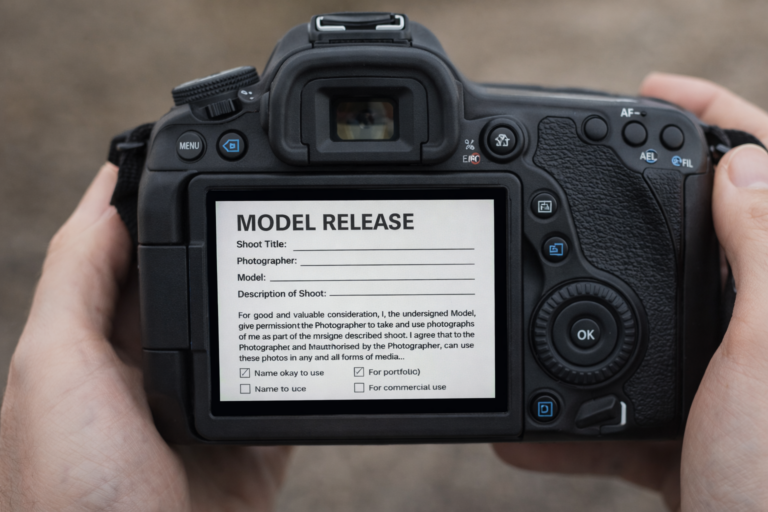
In the UK, you do not need a model release for many common uses. A photographer can still use images even if you do not sign a release. So if you care about usage, agree limits in writing before the shoot goes ahead.
If the photographer does use a model release, read it in full. Check what rights you give, where images can appear, and whether permission lasts forever or has an end date. If the model is under 18, a parent or legal guardian must control permissions and sign.
Also ask how the photographer will store and deliver your images. Confirm how long they keep files and how you can request removal from their own platforms where possible.
Payment, Pressure, and Warning Signs
Clarify costs and expectations before the shoot. If the photographer offers a free session, confirm what they receive in return, such as rights to use images for portfolio or promotion. Anything agreed should be written down.
Be cautious of pressure tactics. This includes rushing you to book, discouraging questions, refusing a chaperone, insisting on isolated locations, or repeatedly changing plans at the last minute. Another warning sign is pushing boundaries, such as suggesting more revealing content than you agreed, or dismissing concerns as “normal for modelling”.
If anything feels wrong, leave. You do not owe an explanation, and you do not need to stay polite to stay safe.
Practical Safety Checklist for the Day
Before you go
• Tell someone where you are going and when you will be back
• Share the photographer’s name, phone number, and profile links
• Confirm the exact location, time, and duration in writing
• Agree the shoot type, clothing, and boundaries in writing
• Arrange your own transport so you can leave independently
• Bring a charged phone and consider a power bank
• Bring a chaperone, especially for under-18s or first shoots
On arrival
• Stay in public, populated areas where possible
• If the location feels wrong, leave immediately
• Do not get into the photographer’s car
• Do not go into private buildings, hotels, or homes for a first shoot
• Keep your belongings with you at all times
During the shoot
• Keep to what was agreed in advance
• If the photographer pushes boundaries, stop the shoot
• If you feel unsafe, leave without debate
• Take breaks as needed and check in with your chaperone
• Do not drink alcohol or take substances offered to “relax”
After the shoot
• Keep all messages, agreements, and any release forms
• Confirm how and when images will be delivered
• If you want images kept private, restate that in writing
• If you believe an under-18 has been targeted or groomed, report it to the police
Booking and Next Steps
If you are considering your first photoshoot in Devon or Cornwall and want a structured, fully explained approach, get in touch before booking. We can discuss the shoot type, location options, and how boundaries, consent, and image use are handled.
Contact me to arrange an initial chat and confirm whether a session would be suitable.